'%20stroke-width='2.06905'/%3e%3cpath%20d='M11.8693%2013.0529L34.8478%2010.9912L5.66088%204.90687M11.8693%2013.0529L16.4275%2029.5866L11.1288%2025.2477M11.8693%2013.0529L5.66088%204.90687M5.66088%204.90687L3.70953%2030.1002L11.1288%2025.2477M5.66088%204.90687L11.1288%2025.2477'%20stroke='url(%23paint1_linear_logo_mark)'%20stroke-width='2.06905'/%3e%3cdefs%3e%3clinearGradient%20id='paint0_linear_logo_mark'%20x1='31.1877'%20y1='15.4705'%20x2='15.2677'%20y2='22.1691'%20gradientUnits='userSpaceOnUse'%3e%3cstop%20stop-color='%2300FFD2'/%3e%3cstop%20offset='1'%20stop-color='%23114239'/%3e%3c/linearGradient%3e%3clinearGradient%20id='paint1_linear_logo_mark'%20x1='15.438'%20y1='10.5337'%20x2='25.1816'%20y2='22.396'%20gradientUnits='userSpaceOnUse'%3e%3cstop%20stop-color='%2392CEC0'/%3e%3cstop%20offset='1'%20stop-color='white'/%3e%3c/linearGradient%3e%3c/defs%3e%3c/svg%3e)

Perspectives
So, about that product studio we're thinking of building.
AI can make an idea look real very quickly. We're exploring what it takes to help someone actually make the thing.
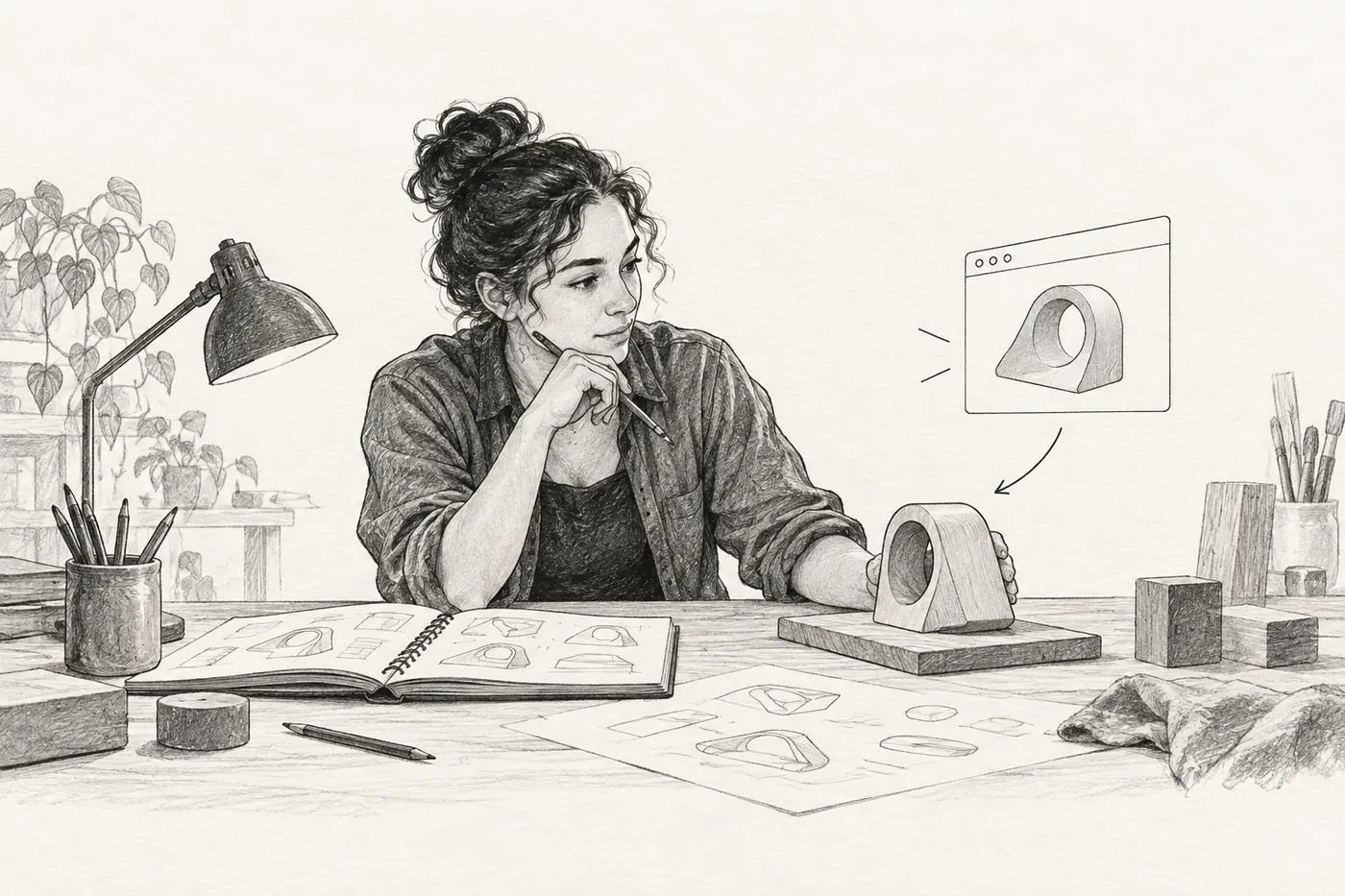
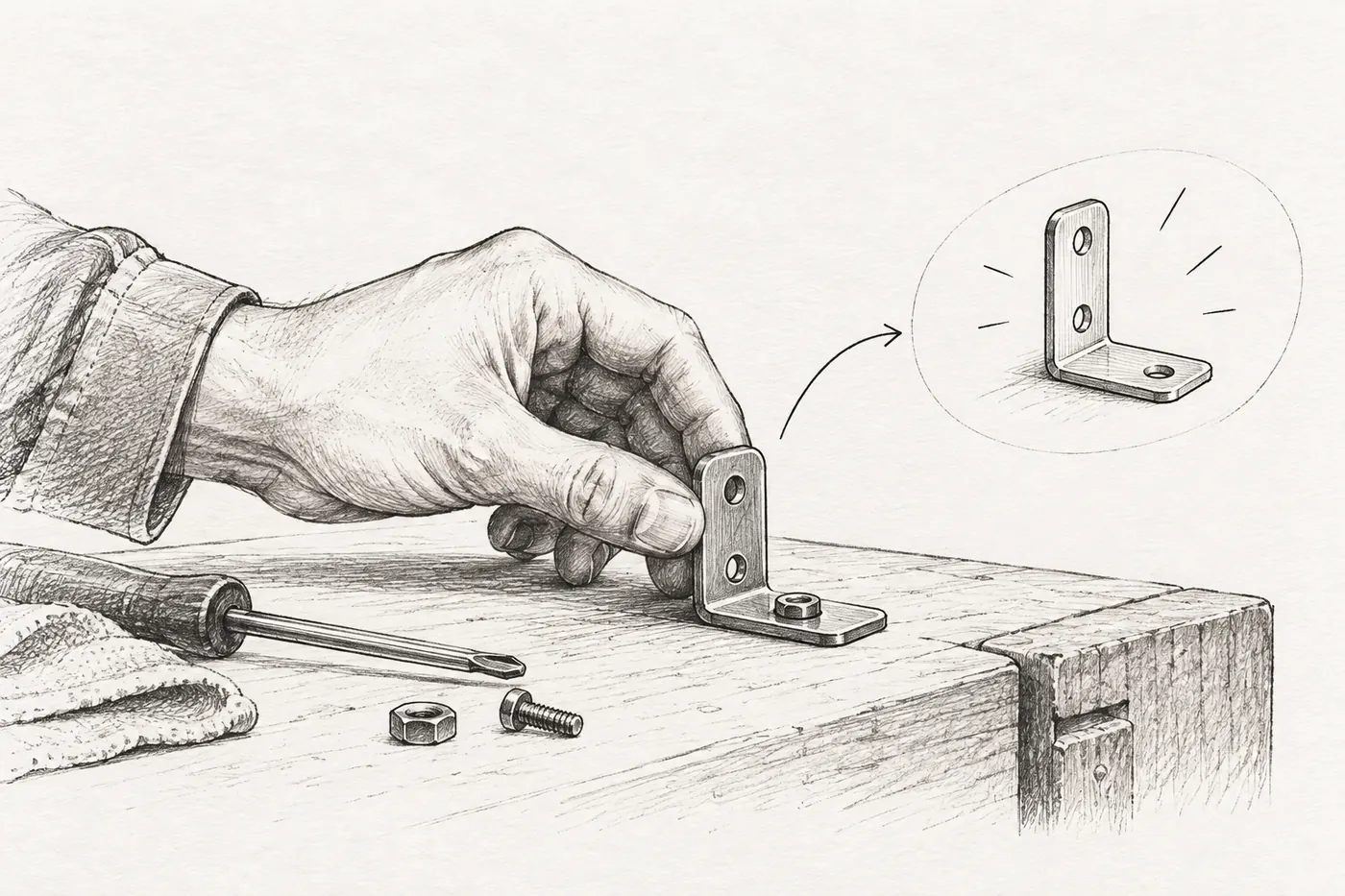
You can spend an evening playing with an idea and come away with a name, a page and a rather convincing picture of the product. Lovely. Now put the actual thing on the desk. That next step is where the conversation gets interesting.
It's also why we're thinking about a product studio inside Selfcrafted. Right now, in September 2026, this is a concept we're actively exploring. There isn't a finished studio hiding behind a launch button, and this post isn't a promise that every feature is about to ship. It's a look at the problem that's been occupying us.
The picture is the easy bit to fall in love with
A nice product image makes it very easy to skip ahead in your head. You can almost feel the object. You already know where you'd put it. Then someone asks how it goes together, whether the parts fit, or who is actually going to make it. Suddenly the picture has a lot less to say.
AI is opening up a fun space for exploring shapes, ideas and alternatives. We want to use that. But physical products eventually have to deal with physical reality, and somebody has to take responsibility for the decisions between the exciting image and the thing you receive. That gap is what a product studio ought to help with.
Somewhere to work on your thing
The broad idea is an approachable place to describe a product, explore what it could look like, change your mind a few times, and make progress towards something buildable. Maybe you start with a problem. Maybe you already have a bit of hardware and want to turn it into an object someone would actually enjoy using.
Say you want a little desk device that shows the information you keep checking on your phone. You should be able to explore that idea without first becoming the person who knows every tool, every supplier and every question to ask. You still need decisions and judgement. The studio should help you reach those decisions with a lot less aimless running around.
“The useful part starts when an idea can survive a conversation with the person who has to make it.”
We want that exploration to stay playful. Try a different shape. Realise the original one was better. Discover a simpler way to get the result you wanted. There's value in having somewhere to do that, even if you never intend to launch a company around the outcome.
Useful before the crowd arrives
A marketplace has an awkward early question: why should a buyer show up before there are enough makers, and why should a maker show up before there are enough buyers? A studio gives us another place to begin. One person, one idea, one useful session. There can be a reason to open Selfcrafted even before a crowd is waiting for the result.
That's an important shift in what we're thinking about. Help somebody make progress first. If that progress turns into a product other people want, there's a natural reason for the marketplace and the community to be there. The creation process can give the rest of the platform something real to gather around.
The people making it still matter
The direction we're exploring includes a path from the studio to approved makers who can review a proposed build and help turn it into a physical object. That human step matters. An attractive concept and an agreed, makeable product are different stages of the work. We want the experience to make that difference understandable.
We're also interested in what happens when an idea finds its small crowd. Maybe a few people want the same thing and can get behind a batch together. That's a possibility we're exploring, not an ordering programme we're announcing today. The details need to make sense for the person buying and the person doing the making.
We're keeping the machinery off this page
There are plenty of technical questions behind this, and we're deliberately not getting into them here. The same goes for pricing, exact launch scope and the finer points of how orders would work. Those are still being worked through. We'd rather share the direction clearly than dress an unfinished decision up as a feature.
What we're comfortable saying is this: as AI makes it easier to explore an idea, helping someone choose well and get something useful made becomes more interesting. A product studio should give that enthusiasm somewhere practical to go. Less time wondering which disconnected step comes next; more time working on the thing itself.
So that's what we're conceptualising at Selfcrafted at the moment. A place where a consumer, a hobbyist or a maker can start with “wouldn't it be nice if…” and have a better chance of ending up with something they can hold. We have a lot to figure out. It feels like a worthwhile thing to figure out.