'%20stroke-width='2.06905'/%3e%3cpath%20d='M11.8693%2013.0529L34.8478%2010.9912L5.66088%204.90687M11.8693%2013.0529L16.4275%2029.5866L11.1288%2025.2477M11.8693%2013.0529L5.66088%204.90687M5.66088%204.90687L3.70953%2030.1002L11.1288%2025.2477M5.66088%204.90687L11.1288%2025.2477'%20stroke='url(%23paint1_linear_logo_mark)'%20stroke-width='2.06905'/%3e%3cdefs%3e%3clinearGradient%20id='paint0_linear_logo_mark'%20x1='31.1877'%20y1='15.4705'%20x2='15.2677'%20y2='22.1691'%20gradientUnits='userSpaceOnUse'%3e%3cstop%20stop-color='%2300FFD2'/%3e%3cstop%20offset='1'%20stop-color='%23114239'/%3e%3c/linearGradient%3e%3clinearGradient%20id='paint1_linear_logo_mark'%20x1='15.438'%20y1='10.5337'%20x2='25.1816'%20y2='22.396'%20gradientUnits='userSpaceOnUse'%3e%3cstop%20stop-color='%2392CEC0'/%3e%3cstop%20offset='1'%20stop-color='white'/%3e%3c/linearGradient%3e%3c/defs%3e%3c/svg%3e)

Guides
From prototype to something people can use.
The distance from a working demo to a usable product is filled with small, consequential decisions.
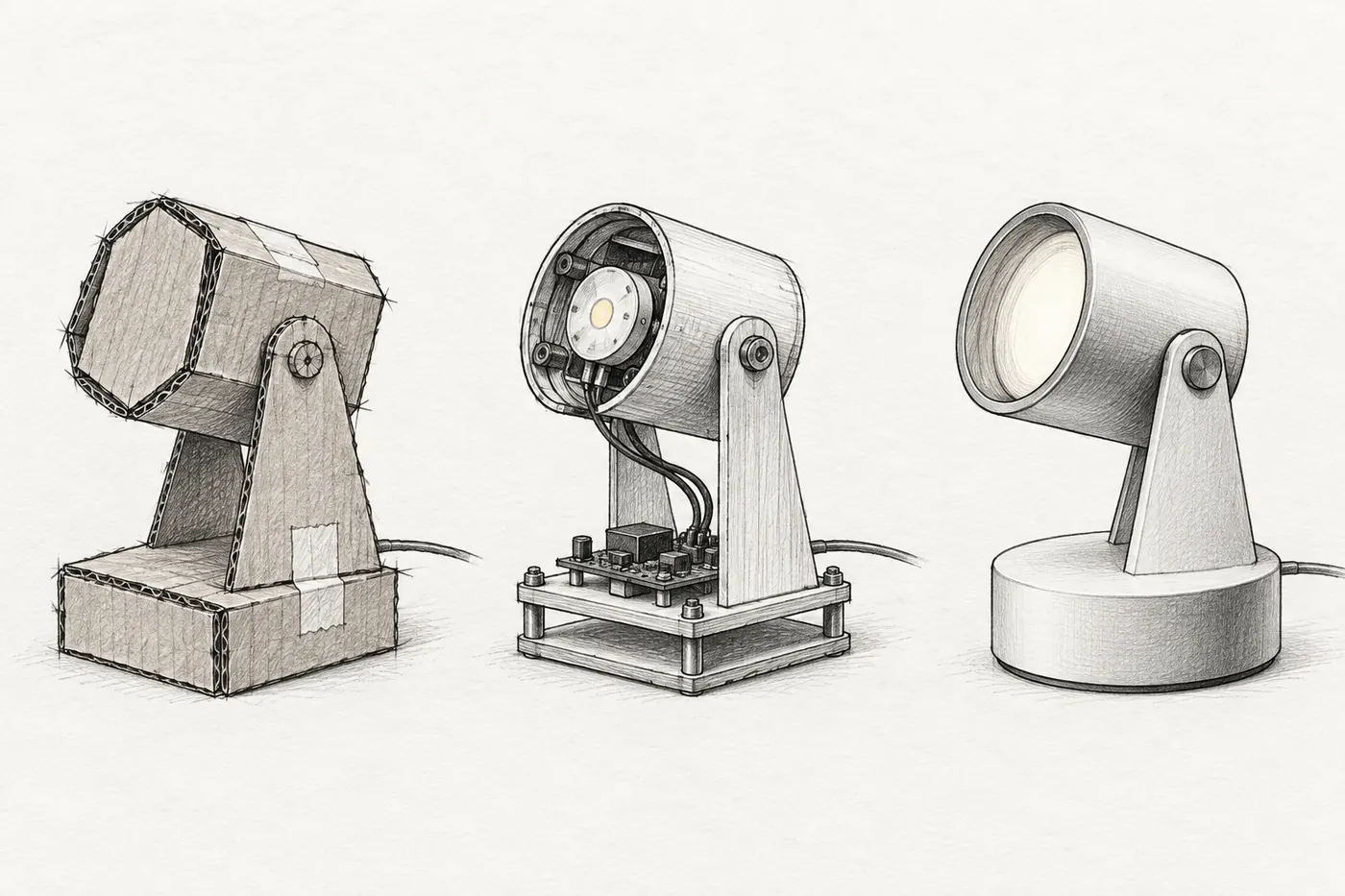
A prototype answers an exciting question: can this idea work? A product must answer a slower set of questions. Can someone recognize what to do? Can the maker build it again? Can it travel, be set up, and return to a useful state after something unexpected happens? The proof on the bench is the beginning of that work.
This transition can feel less creative because progress arrives through details. A cable receives strain relief. A confusing button gets a better label. A temporary spacer becomes a repeatable part. Yet these decisions are where the invention becomes available to another person.
Define the promise before refining the object
Write one sentence describing what the finished build helps someone accomplish. Then define the conditions around that promise: where it is used, what it connects to, what the user already knows, and what they must provide. This boundary prevents polish from spreading into parts of the concept that are not ready to become product.
“A product is a repeatable experience built around a working idea.”
Choose a small set of success conditions from that promise. The essential operation should be reliable. Setup should have a clear path. The main states should be visible. The build should tolerate ordinary handling in its intended setting. Specific conditions give each revision a purpose and make “done” less dependent on mood.
Replace memory with repeatability
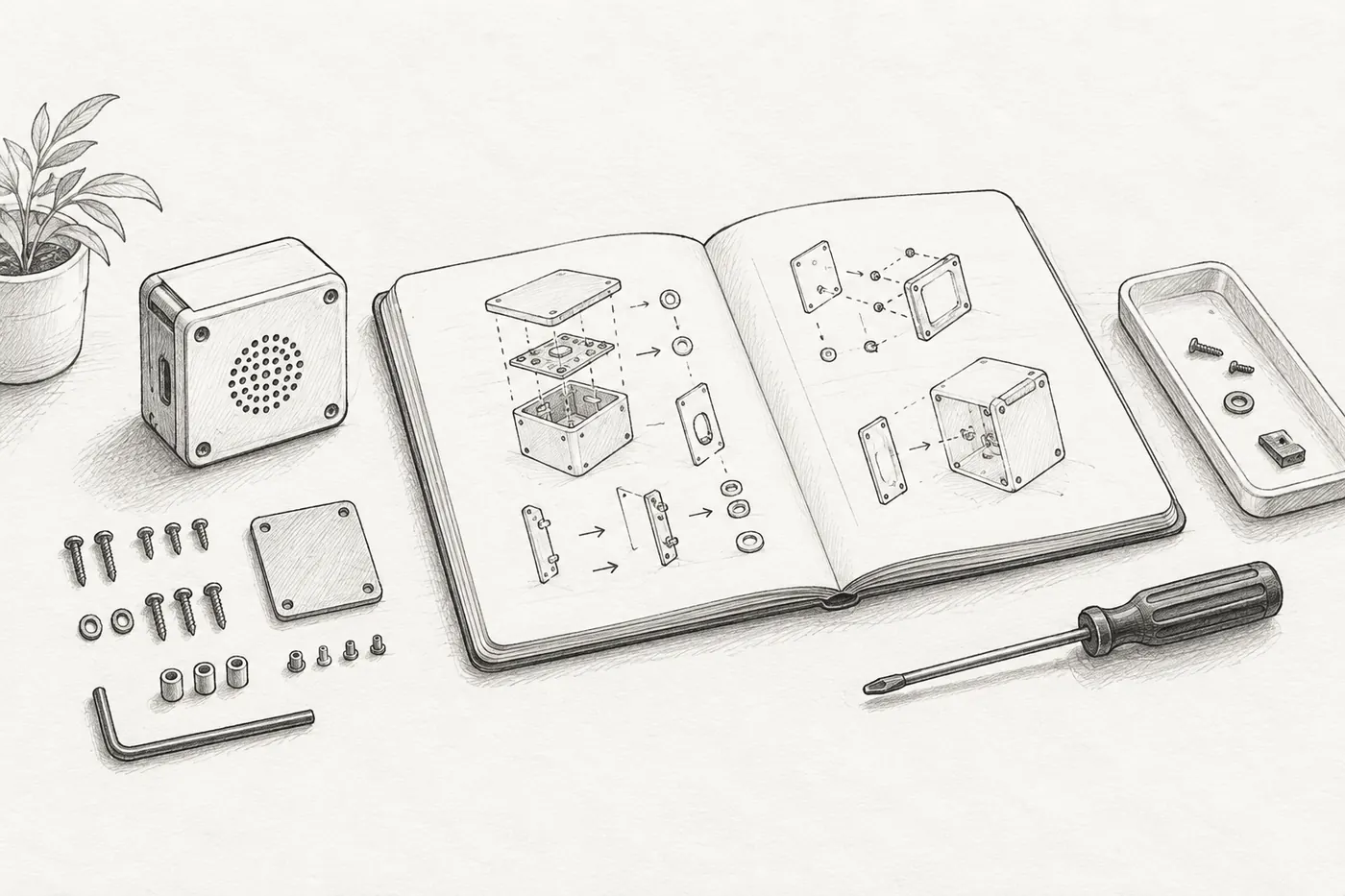
The prototype contains invisible knowledge: the order you tighten parts, the wire that must bend a certain way, the configuration you changed once and forgot. Build a second unit from written notes. Wherever the second build stalls, the process is still living in your hands rather than in the product.
- Freeze a revision before changing parts, files, or assembly steps.
- Name components consistently across the bill of materials and instructions.
- Record simple checks at stages where mistakes become hidden later.
- Keep acceptable variations explicit instead of correcting them from memory.
Repeatability also changes sourcing decisions. A convenient one-off part may be awkward to replace. A beautiful finish may vary too much between builds. The right choice is not always the most standardized one, but its tradeoff should be visible before a batch depends on it.
Watch someone meet it
Give a representative build and its draft instructions to someone who has not watched it develop. Ask them to narrate what they expect, then resist guiding each step. Their pauses reveal missing cues. Their interpretation of a label matters more than the meaning you intended. Observe the product and instructions as one system.
Sort what you learn by consequence. Address anything that prevents the main task, creates an easy-to-make assembly error, or leaves the user unable to recover. Cosmetic preferences can inform later revisions. Trying to absorb every suggestion at once makes the product less coherent and delays the next useful test.
Prepare the handoff
Before release, assemble the exact package: product, accessories, setup guide, revision identity, and support route. Follow the customer path from opening it to completing the central task. Then store the files and records needed to make or understand that revision again.
There is no point where a physical product stops changing forever. Shipping creates a stable reference, not a final answer. Make that reference coherent, document what it is, and let real use provide the next set of questions. The prototype proved the mechanism. The product earns trust by making its value repeatable.